
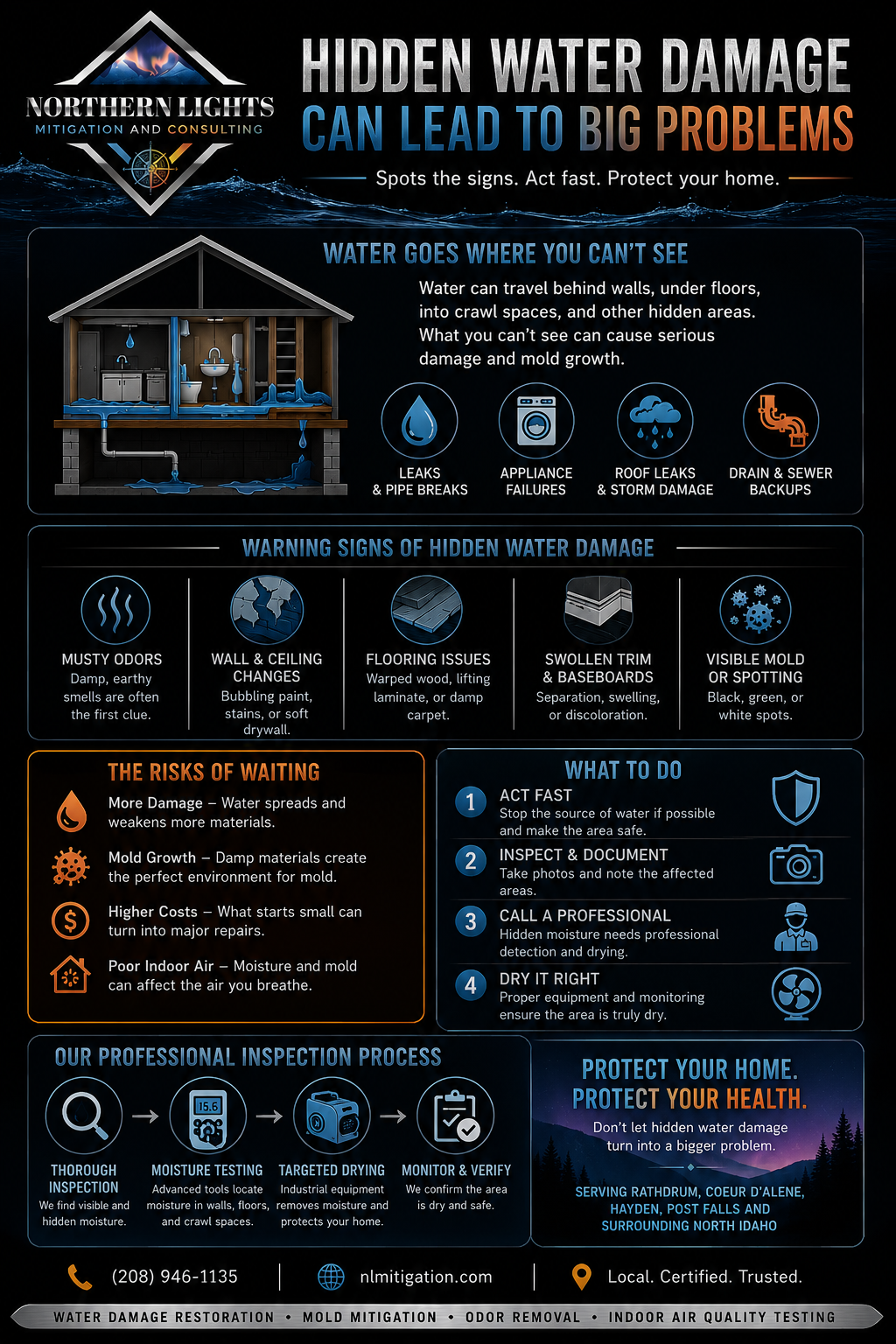
Water damage is not always obvious. Sometimes a homeowner in North Idaho knows exactly what happened: a pipe burst, a dishwasher leaked, a basement flooded, or a roof leak showed up during a storm. Other times, the signs are much more subtle. A room starts to smell musty. Flooring begins to lift. Paint starts bubbling. A wall feels soft near the baseboard. By the time the damage becomes visible, water may have already moved into places you cannot see.
For homeowners in Rathdrum, Coeur d’Alene, Hayden, Post Falls, and the surrounding North Idaho area, hidden water damage should be taken seriously. Moisture behind walls, under flooring, inside crawl spaces, or beneath cabinets can lead to material damage, odor issues, and potential mold growth if it is not addressed correctly.
At Northern Lights Mitigation & Consulting, we help property owners identify, dry, and resolve water damage before it becomes a larger problem. If you suspect moisture is trapped somewhere in your home, the safest approach is to have the affected area inspected before assuming it will dry on its own.
Why Hidden Water Damage Is Such a Problem
The biggest issue with hidden water damage is that it often looks smaller than it really is. Water follows gravity, building materials, airflow, and small gaps. A leak that starts in one area may travel under flooring, behind trim, into wall cavities, or down into a crawl space.
For example, a small supply line leak under a sink may appear to be limited to the cabinet. But if the water has been present long enough, it may affect the cabinet base, nearby drywall, flooring, and the wall behind the vanity. A washing machine leak may look like a surface cleanup at first, but moisture can move beneath vinyl plank, laminate, carpet padding, or baseboards.
This is why professional water damage restoration is not just about removing visible water. The real goal is to find where the moisture traveled and dry the affected materials properly.
Common Signs of Hidden Water Damage

One of the first signs homeowners notice is smell. A musty odor can be an early warning that moisture is trapped somewhere it should not be. This smell may be stronger near baseboards, bathrooms, laundry rooms, crawl space access points, or rooms with poor ventilation.
Walls and ceilings can also show signs of water damage. Bubbling paint, staining, peeling drywall texture, or soft spots can point to moisture behind the surface. If drywall feels damp, swollen, or crumbly, the damage may have been present longer than expected.
Flooring is another common place where water damage shows up. Hardwood can cup or warp. Laminate may bubble or separate. Carpet may feel damp or smell musty even after the surface appears dry. In some cases, the top layer of flooring dries while moisture remains underneath.
Cabinets, trim, and baseboards can also reveal hidden water problems. Swelling, separation from the wall, discoloration, or soft wood near the floor may indicate that water has been absorbed into porous materials.
Can Water Damage Turn Into Mold?
Yes, water damage can create conditions where mold may grow, especially when moisture is not removed properly. Mold needs moisture and an organic surface to grow, and many common building materials can provide that environment when they stay damp.
Drywall, wood framing, insulation, carpet padding, cabinetry, and subfloor materials can all be affected by moisture. If water sits too long or drying is incomplete, mold risk increases.
This does not mean every leak automatically becomes a mold problem. The key factors are how much water was present, how long materials stayed wet, what type of water caused the damage, and whether the affected areas were dried correctly.
If you notice a musty smell, visible spotting, or recurring dampness after water damage, it is worth scheduling a professional inspection. Northern Lights Mitigation & Consulting provides mold mitigation and indoor air quality testing, which can be especially helpful when the source or extent of the issue is unclear.
Why DIY Drying Is Often Not Enough

Many homeowners try to dry water damage with towels, box fans, open windows, or household dehumidifiers. For very small surface spills, that may be enough. But when water reaches walls, flooring, cabinets, insulation, or crawl spaces, DIY drying becomes much less reliable.
The issue is not only whether the surface feels dry. A wall can feel normal while moisture remains behind it. Flooring can look dry while the underlayment or subfloor is still holding moisture. Carpet can feel dry on top while padding underneath remains damp.
Professional water mitigation uses moisture detection tools to locate affected areas and track drying progress. Air movers and commercial dehumidifiers are placed strategically to dry the structure, not just the room. The drying process may also require removing wet materials that cannot be safely or effectively dried in place.
Without moisture testing, it is difficult to know when the area is truly dry.
Hidden Water Damage in Crawl Spaces
Crawl spaces are a major concern in North Idaho homes. Moisture in a crawl space can go unnoticed because it is out of sight and not part of daily living space. However, crawl space water damage can affect insulation, wood framing, vapor barriers, odors, and indoor air quality.
Common causes include plumbing leaks, poor drainage, snowmelt, heavy rain, foundation seepage, and condensation. Sometimes homeowners first notice a problem because of a musty smell inside the home, uneven humidity, or cold floors.
If water has entered a crawl space, it should be inspected rather than ignored. Damp crawl space materials can create long-term problems if the moisture source is not corrected and the area is not properly dried.
What Happens If Water Damage Is Not Treated Quickly?
When water damage is delayed, the affected materials can continue to absorb moisture. Drywall may weaken. Flooring may warp. Trim may swell. Odors may become stronger. Mold risk may increase. In some cases, what could have been a smaller mitigation project can turn into a more involved restoration issue.
Delayed response can also make it harder to determine the original source and full path of the water. The longer moisture sits, the more difficult it can be to separate the immediate water damage from secondary damage.
This is why quick inspection matters. Even if the leak looks minor, a professional can help confirm whether water stayed on the surface or traveled into hidden areas.
How Professionals Check for Moisture in Walls and Floors
Professional water damage inspections usually include a visual assessment and moisture testing. Depending on the situation, technicians may check walls, flooring, baseboards, cabinets, ceilings, and nearby rooms to see where moisture has moved.
Moisture meters help identify materials that are holding elevated moisture. Thermal imaging may also help detect temperature differences that suggest possible moisture patterns, though it is typically used alongside other tools rather than as a standalone answer.
The goal is to build a clear drying plan. That may include extracting water, removing damaged materials, placing drying equipment, monitoring moisture levels, and confirming when the affected materials have reached appropriate drying goals.
When Should You Call a Water Damage Professional?
You should call a professional when water damage goes beyond a small, surface-level spill. If water reached drywall, flooring, cabinets, carpet, insulation, or a crawl space, it is worth having the area inspected.
You should also call if you notice musty odors, soft drywall, bubbling paint, warped flooring, visible mold-like growth, or recurring moisture. If the water came from a sewer backup, appliance discharge, or another potentially contaminated source, professional help is especially important.
Homeowners in Rathdrum, CDA, Hayden, and Post Falls should also be cautious after storm-related water intrusion, roof leaks, frozen pipe issues, or crawl space water problems. These situations often involve more hidden moisture than what is visible at first.
Local Help for Hidden Water Damage in North Idaho
Northern Lights Mitigation & Consulting provides water damage restoration, mold mitigation, odor removal, indoor air quality testing, and related restoration services for homeowners and businesses throughout North Idaho.
If you are dealing with water damage in Rathdrum, Coeur d’Alene, Hayden, Post Falls, or a surrounding community, do not wait for the problem to reveal itself later. Hidden moisture can lead to bigger repairs, stronger odors, and potential mold concerns when it is not handled correctly.
A professional inspection can help you understand what areas are affected, what materials may need attention, and how to move forward safely.
If your home has had a leak, flood, appliance failure, roof leak, or crawl space moisture issue, contact Northern Lights Mitigation & Consulting to schedule a water damage inspection and get a clear mitigation plan in place.
Frequently Asked Questions About Hidden Water Damage and Mold
-
Signs may include musty odors, bubbling paint, soft drywall, staining, swollen baseboards, or dampness that keeps returning. A professional can use moisture detection tools to check whether water has moved behind the surface.
-
Yes. Mold may grow when building materials remain damp and are not dried properly. If you notice odor, discoloration, or lingering moisture after a leak, it is best to have the area inspected.
-
Sometimes light odors improve after materials dry, but a persistent musty smell may mean moisture is still present. Odor after water damage should not be ignored, especially if it returns when the room is closed up.
-
It depends on the type of flooring, how much water was present, and how quickly drying begins. Some materials may be dried, while others may need removal if moisture is trapped underneath or the material has started to fail.
-
If the leak was small, caught immediately, and stayed on a hard surface, you may be able to clean it up yourself. If water reached walls, flooring, cabinets, carpet, or a crawl space, professional inspection is the safer option.
