
Will Insurance Cover Water Damage Restoration in North Idaho? What Homeowners Should Know
When water damage happens, one of the first questions homeowners ask is simple: “Will insurance cover this?”
It is an understandable question. Water damage can quickly become expensive, especially when it affects flooring, drywall, cabinets, crawl spaces, insulation, or personal belongings. For homeowners in Rathdrum, Coeur d’Alene, Hayden, Post Falls, and the surrounding North Idaho area, knowing how water damage insurance claims typically work can help you respond faster and avoid unnecessary confusion during an already stressful situation.
At Northern Lights Mitigation & Consulting, we help property owners identify water damage, begin mitigation, document affected areas, and create a clear plan for drying and restoration. While coverage decisions are made by your insurance provider, proper documentation and a fast response can make the claim process much easier to navigate.
Does Homeowners Insurance Cover Water Damage Restoration?
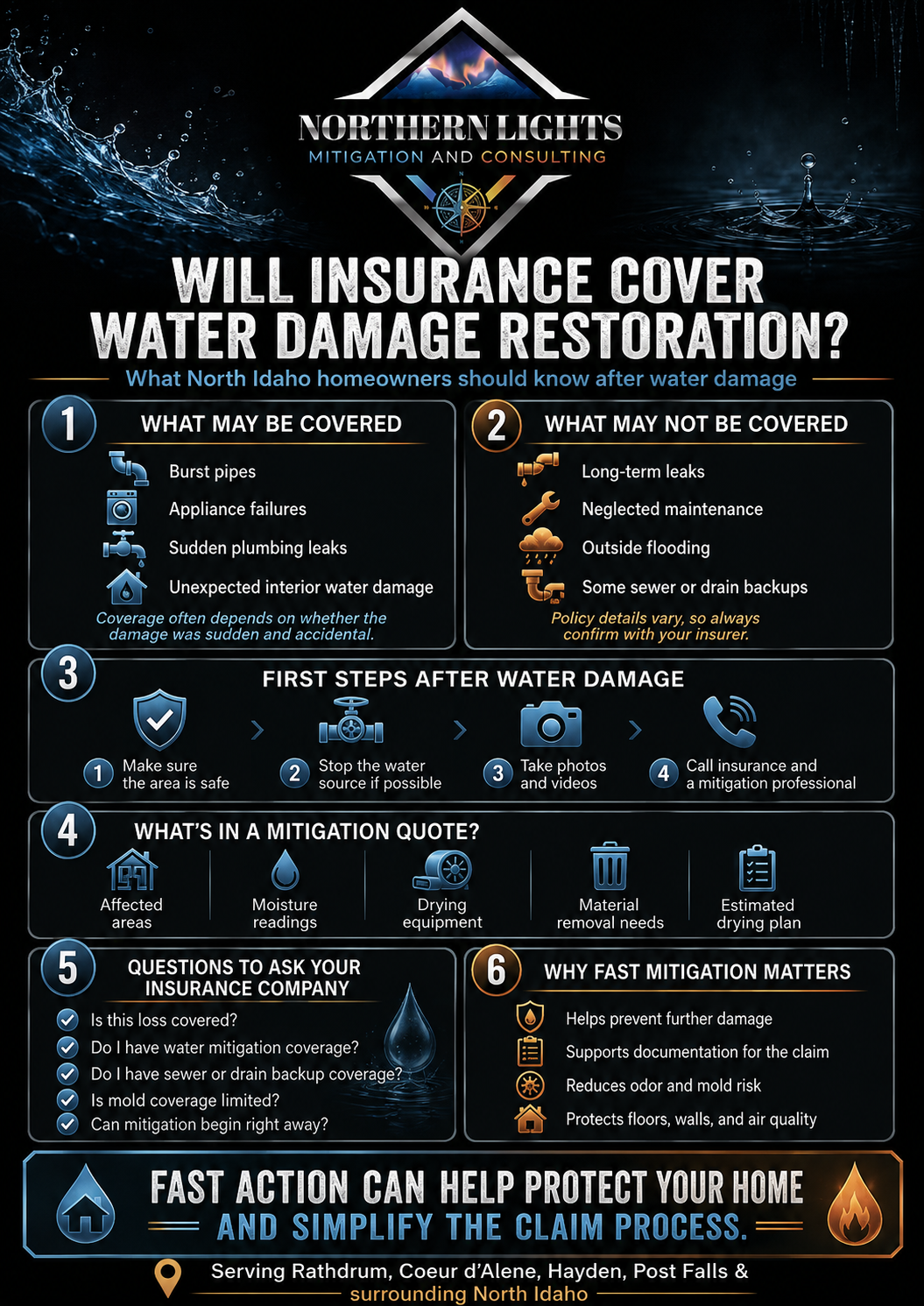
Homeowners insurance may cover water damage restoration when the damage is sudden and accidental. This can include situations like a burst pipe, a failed water supply line, a leaking appliance, or an unexpected plumbing issue inside the home.
However, not every type of water damage is handled the same way. Insurance policies often distinguish between sudden damage, gradual damage, outside flooding, maintenance-related issues, and sewer or drain backups. This is why it is important to contact your insurance company quickly and ask how your specific policy applies.
A water damage restoration company can inspect the affected areas, identify visible and hidden moisture, and provide documentation of the mitigation work. Your insurance company will determine what is covered, but having clear information about the damage can help support the process.
Common Water Damage Situations That May Involve Insurance
Every policy is different, but many homeowners contact their insurance provider after events such as burst pipes, water heater failures, dishwasher leaks, washing machine overflows, toilet supply line failures, roof leaks, and sudden plumbing breaks.
In North Idaho, seasonal issues can also create water damage concerns. Frozen pipes, snowmelt, heavy rain, and crawl space moisture can all create problems depending on the home, the source of the water, and the condition of the property.
Some issues may be straightforward. Others may require more investigation. For example, water near a bathroom wall may appear to come from a plumbing fixture, but moisture testing may show that the water traveled into the subfloor, behind trim, or into a nearby room.
That is why the first step is not guessing. The first step is identifying where the water came from, where it traveled, and what materials were affected.
What Types of Water Damage Are Less Likely to Be Covered?
Some water damage issues may be more difficult to get covered through a standard homeowners insurance policy. These can include long-term leaks, neglected maintenance, groundwater intrusion, outside flooding, or damage that developed gradually over time.
For example, if a slow leak under a sink has been occurring for months, your insurance provider may view that differently than a sudden pipe break. If water comes into the home from outside during a flood event, that may fall under a separate flood insurance policy rather than standard homeowners coverage.
Sewer backups and drain backups may also depend on whether you have a specific endorsement or added coverage. If you are unsure, ask your insurance agent or adjuster what your policy includes.
The most important thing is to avoid assuming coverage either way. Call your insurance company, explain what happened, and get direction on next steps.
What Should You Do Before Filing a Water Damage Claim?
Before filing a claim, make sure the area is safe. Avoid standing water near electrical outlets, cords, appliances, or the breaker panel. If the source of water is still active, shut it off if you can do so safely.
Next, document the damage. Take photos and videos of the affected area, the water source if visible, damaged belongings, flooring, walls, ceilings, and any standing water. Try to capture the condition before anything is moved or removed.
You should also make a simple written timeline. Include when you first noticed the damage, what you believe caused it, what steps you took to stop the water, and when you contacted help. This can be useful when speaking with your insurance company.
Then, call a professional water mitigation company. Waiting too long can make the damage worse. Most insurance policies expect homeowners to take reasonable steps to prevent additional damage after a loss.
Why Fast Water Mitigation Matters for Insurance Claims
Water damage can continue spreading after the visible water is gone. Moisture can remain behind walls, under flooring, beneath cabinets, inside crawl spaces, and in insulation. If the affected area is not dried correctly, secondary damage can develop.
Fast mitigation helps limit the spread of damage. It can also help create a clearer record of what happened and what was done to address it. Professional mitigation may include moisture testing, water extraction, removal of unsalvageable materials, drying equipment, humidity control, and monitoring.
From an insurance standpoint, professional documentation matters because it can show which areas were affected, what materials required attention, how drying was monitored, and when the structure reached appropriate drying goals.
This documentation does not guarantee coverage, but it can help create a more organized claim process.
What Is Included in a Water Mitigation Quote?
A water mitigation quote should explain the scope of the problem and the work needed to address it. This may include inspection findings, affected rooms, moisture readings, water extraction needs, drying equipment, material removal, containment, cleaning, odor control, and monitoring.
The quote should help answer several important questions:
What areas are affected?
What materials are wet?
Can materials be dried in place?
What needs to be removed?
How much equipment is needed?
How long may drying take?
Are there mold, odor, or indoor air quality concerns?
A clear mitigation quote should not leave homeowners guessing. It should give you a practical understanding of what needs to happen next and why.
Should You Wait for Insurance Approval Before Starting Water Mitigation?
In many water damage situations, waiting can make the problem worse. Water damage restoration is time-sensitive. Moisture that sits inside building materials can lead to swelling, warping, odor, deterioration, and possible mold concerns.
Homeowners should contact their insurance company as soon as possible, but they should also understand that mitigation may need to begin quickly to prevent additional damage. Your insurance provider can explain their claim process, but stopping further damage is usually a priority.
If you are unsure what to do, call your insurance company and a water mitigation professional. Getting both conversations started early can help you make a more informed decision.
How Professionals Document Water Damage
Professional water damage documentation may include photos, moisture readings, affected material notes, equipment logs, drying progress, and recommendations for removal or restoration. This documentation helps create a record of the job from the initial inspection through the drying process.
Moisture readings are especially important because water damage is not always visible. A wall or floor may look dry while still holding moisture beneath the surface. Professional tools help identify these hidden areas and confirm when drying is complete.
This is especially important in bathrooms, kitchens, laundry rooms, basements, and crawl spaces, where moisture can travel into concealed spaces.
What If Mold Is Found During a Water Damage Claim?
If water damage has been present for too long or was not dried properly, mold may become a concern. This can complicate the restoration process and may affect how the claim is handled.
Mold coverage varies by policy and by the cause of the moisture. Some policies may include limited mold coverage, while others may have exclusions or specific conditions. If mold is suspected, ask your insurance provider how your policy addresses mold-related work.
Northern Lights Mitigation & Consulting provides mold mitigation and indoor air quality testing in addition to water damage restoration. This can be helpful when a water loss has created odor concerns, visible growth, or questions about indoor air quality.
Questions to Ask Your Insurance Company After Water Damage
When speaking with your insurance provider, it helps to ask direct questions. These may include:
Is this type of water damage covered under my policy?
Do I have coverage for water mitigation?
Do I have sewer or drain backup coverage?
Is outside flooding excluded from my homeowners policy?
Do I have mold coverage or mold limits?
Do I need an adjuster to inspect the damage?
Can mitigation begin immediately to prevent further damage?
What documentation do you need from me or the mitigation company?
Getting these answers early can help you understand your responsibilities and next steps.
Local Water Damage Restoration Help in Rathdrum, CDA, Hayden, and Post Falls
Water damage is stressful, and insurance questions can make the situation feel even more overwhelming. You do not have to sort through the damage alone.
Northern Lights Mitigation & Consulting helps homeowners and businesses in Rathdrum, Coeur d’Alene, Hayden, Post Falls, and surrounding North Idaho communities with water damage restoration, water mitigation, mold mitigation, odor removal, and indoor air quality testing.
If you are dealing with a burst pipe, appliance leak, roof leak, crawl space moisture issue, or unexpected flooding, the right first step is a professional inspection. We can help identify affected areas, document the damage, and create a mitigation plan that helps protect your home.
If water damage has affected your property, contact Northern Lights Mitigation & Consulting today for local water restoration help in North Idaho.
Frequently Asked Questions About Water Damage Insurance Claims
-
Insurance may cover water damage restoration when the damage is sudden and accidental. Coverage depends on your specific policy, the source of the water, and whether the damage was caused by a covered event.
-
If the area is safe, it is wise to contact both quickly. Your insurance company can explain your coverage and claim process, while a mitigation company can inspect the damage and help prevent it from getting worse.
-
Helpful documentation may include photos, videos, a timeline of events, moisture readings, affected material notes, invoices, and a written mitigation scope. Professional documentation can help clarify the extent of the damage.
-
Mold coverage depends on your policy and the cause of the moisture. Some policies include limited mold coverage, while others may exclude it or require specific conditions to be met.
-
In many cases, mitigation should begin quickly to prevent additional damage. Contact your insurance provider for direction, but do not ignore active water or trapped moisture while waiting for the process to move forward.
